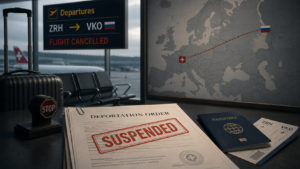
Forced Mobilization, Russian Draft Evaders and Asylum Protection in Europe
Russian mobilization has become not only a military and political issue. For thousands of Russian citizens, it has become a matter of personal security, liberty, criminal risk, political persecution, and international protection.
After Russia’s full-scale invasion of Ukraine, many Russian citizens found themselves facing a choice: to participate in the war, to leave the country, to hide from mobilization, to refuse military service on grounds of conscience, or to seek international protection outside Russia.
For Europe, this category of cases is not a simple migration issue. It lies at the intersection of several legal and political areas:
- international protection;
- asylum law;
- non-refoulement;
- mobilization and military service;
- political opinion;
- risk of persecution;
- risk of participation in international crimes;
- national security of receiving states;
- misuse of Interpol and international wanted notices.
Refusal of mobilization does not automatically mean asylum

In European practice, it is important to distinguish between two different situations.
The first situation is where a person simply does not want to serve in the army or is afraid of war. Fear of military service alone does not always automatically create grounds for refugee status.
The second situation is where refusal to serve is connected with political convictions, moral or religious grounds, the risk of being forced to participate in a war that violates international law, the risk of persecution, disproportionate punishment, torture, mobilization under authoritarian pressure, or coercion into actions that may be linked to war crimes.
It is the second category that requires serious legal analysis.
UNHCR expressly states that draft evasion does not in itself exclude a person from being recognized as a refugee. At the same time, fear of punishment for draft evasion alone is generally not sufficient. The situation changes, however, where military service conflicts with deeply held political, religious, or moral convictions, or where service may lead to participation in unlawful military actions.
Why Russian cases require individual assessment
Cases of Russian citizens who left the country because of mobilization cannot be assessed mechanically.
European authorities must consider:
- whether the person received a summons;
- whether the person belongs to a mobilization-risk category;
- whether the person has military experience;
- whether the person completed compulsory military service;
- whether the person has a military specialty;
- whether the person expressed an anti-war position;
- whether the person participated in opposition, journalistic, human-rights, or anti-war activity;
- whether there is a risk of criminal prosecution;
- whether there is a risk of torture, ill-treatment, or forced deployment to war after return;
- whether the person belongs to regional, ethnic, or politically vulnerable groups.
EUAA country information on the Russian Federation separately addresses issues related to military service, the electronic military register, summonses, deferments, alternative service, raids, draft evasion, and conditions of service. This confirms that mobilization and military obligation are substantial elements in the assessment of Russian asylum cases.
Mobilization, political opinion, and risk of persecution
Refusal of mobilization may carry political meaning.
In an authoritarian system, refusal to participate in war may be perceived by the state not as a private decision, but as disloyalty, an anti-war position, refusal to support state policy, or a form of political resistance.
This is especially important where a person:
- publicly opposed the war;
- criticized the Russian authorities;
- participated in anti-war actions;
- supported Ukraine;
- had contacts with the opposition;
- left Russia after mobilization measures;
- has a case, administrative prosecution, or risk of criminal prosecution;
- belongs to a vulnerable regional or ethnic group.
In such cases, European authorities must assess not only the formal fact of conscription, but also the political context in which the state may perceive the draft evader.
Non-refoulement: the prohibition of return to a country of risk
The key principle is non-refoulement.
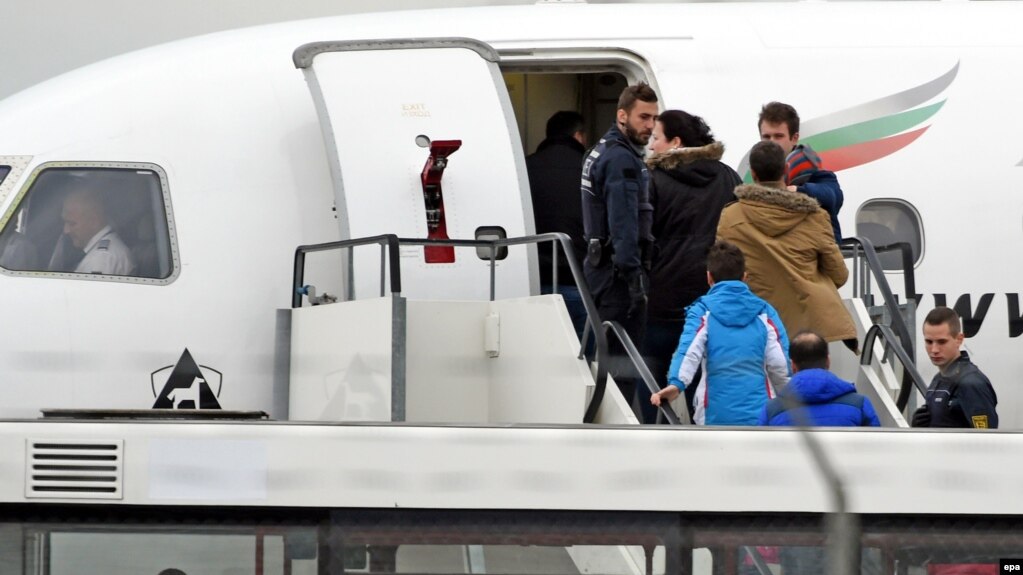
A European state must not return a person to a place where they face a real risk of torture, ill-treatment, political persecution, disproportionate punishment, or other serious violations of fundamental rights.
For this reason, cases involving Russian mobilization refusers cannot be treated merely as ordinary migration cases. In every case, an assessment of return risk must be carried out.
The following questions are essential:
- what will happen to the person after return to Russia;
- whether the person will be detained;
- whether the person will be interrogated;
- whether the person will be forcibly mobilized;
- whether the person will face criminal or administrative prosecution;
- whether there is a risk of ill-treatment;
- whether the person can safely live in another region of Russia;
- whether the state has an interest in the person as politically disloyal.
Article 3 ECHR: prohibition of torture and inhuman treatment
In cases involving refusal of mobilization, deportation to Russia, and the risk of forced return, Article 3 of the European Convention on Human Rights is of central importance.
Article 3 ECHR prohibits torture, inhuman and degrading treatment or punishment. This prohibition is absolute. A state may not deport, remove, or extradite a person to a country where there is a real risk of treatment prohibited by Article 3 ECHR.
For Russian mobilization refusers, this means that European authorities must assess not only the formal violation of military registration rules or draft evasion, but also the real consequences of return to Russia.
Key questions under Article 3 ECHR include:
- whether the person faces detention after return;
- whether there is a risk of forced mobilization;
- whether the person may be sent to the front against their will;
- whether there is a risk of torture, ill-treatment, or pressure;
- whether the person faces disproportionate criminal punishment;
- whether there is a political, anti-war, regional, or ethnic risk profile;
- whether the state may perceive refusal of mobilization as disloyalty or a political position.
Article 3 ECHR is especially important in cases involving Russian citizens from Chechnya, Dagestan, and other regions where the risk of pressure, coercion, collective responsibility, and ill-treatment may be higher than in ordinary mobilization cases.
Therefore, in such cases, the legal position must be built not only around asylum law, but also around Article 3 ECHR, non-refoulement, individual risk assessment, and protection against forced return.
Russian citizens from Chechnya: a separate risk profile
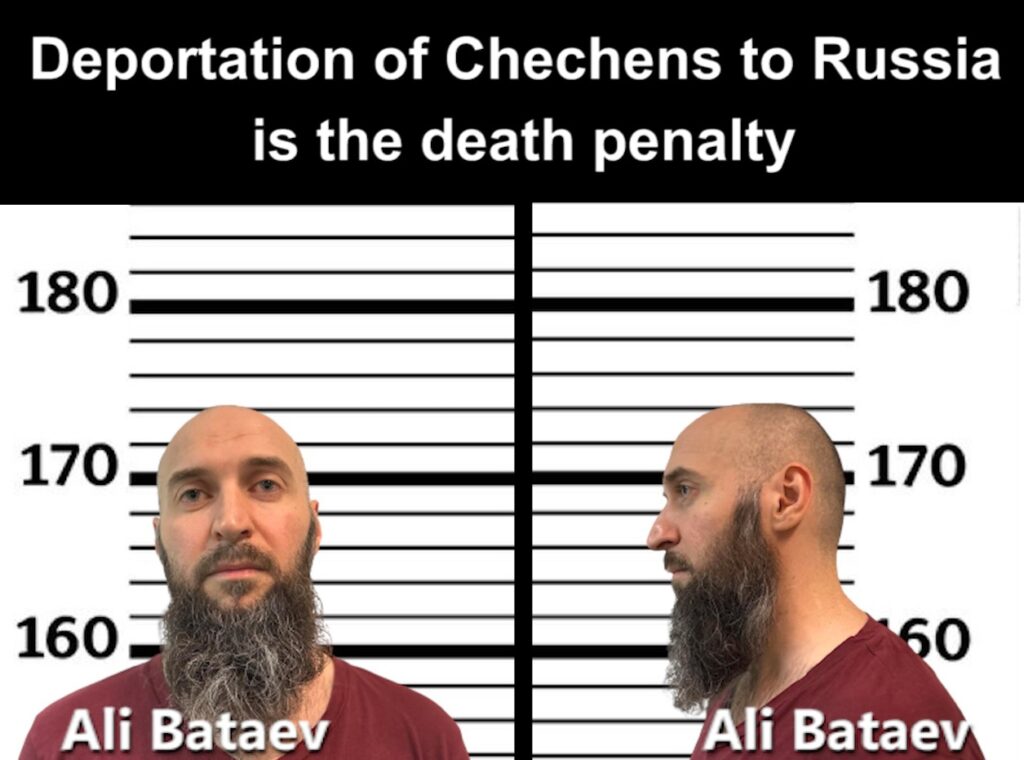
Special attention is required in cases involving Russian citizens from the Chechen Republic.
Cases involving Chechens must not be automatically merged with the general category of Russian citizens. They may have an additional risk profile connected with the regional power system, collective pressure, family responsibility, threats, political loyalty, coercion, and an increased risk of ill-treatment.
LLCA separately conducts investigation and analysis concerning cases of Russian citizens from Chechnya who face the risk of deportation, persecution, or forced return.
This should link internally to the separate LLCA material on Chechen asylum seekers.
European migration policy towards Russian citizens
After the beginning of the full-scale war, European migration policy towards Russian citizens became more complex.
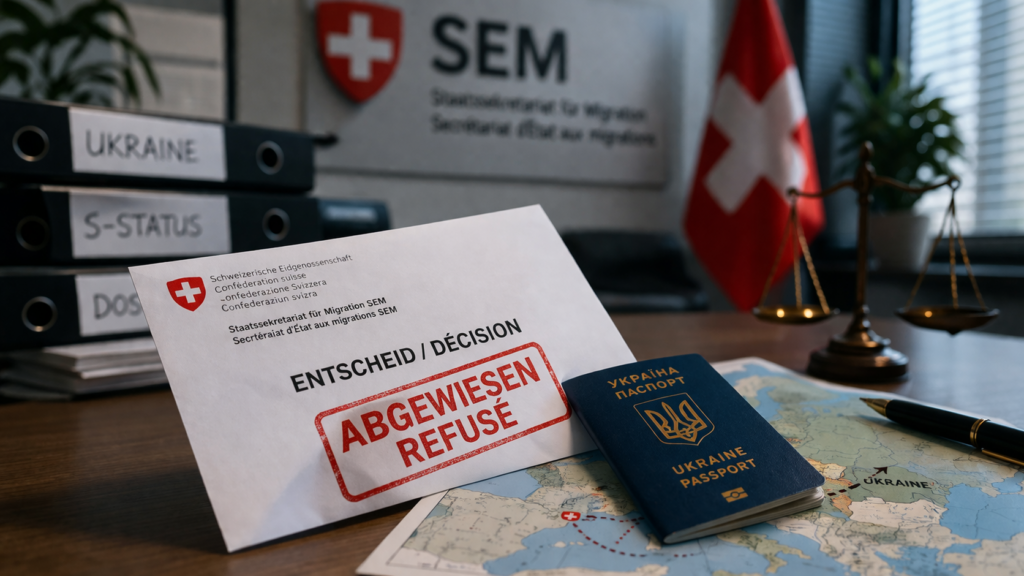
On the one hand, Europe tightened visa and border restrictions concerning Russian citizens. As early as 2022, the European Commission emphasized the need for a more restrictive and coordinated approach to issuing visas to Russian citizens.
On the other hand, visa policy and asylum law are not the same thing.
Even under a restrictive visa policy, a state remains obliged to examine an individual application for international protection where a person claims a risk of persecution, torture, ill-treatment, or other serious threats in the event of return.
This is where the central balance arises:
- Europe has the right to protect its security;
- Europe has the right to examine Russian citizens more strictly;
- but Europe must not return people to situations of real risk;
- every asylum case must be assessed individually.
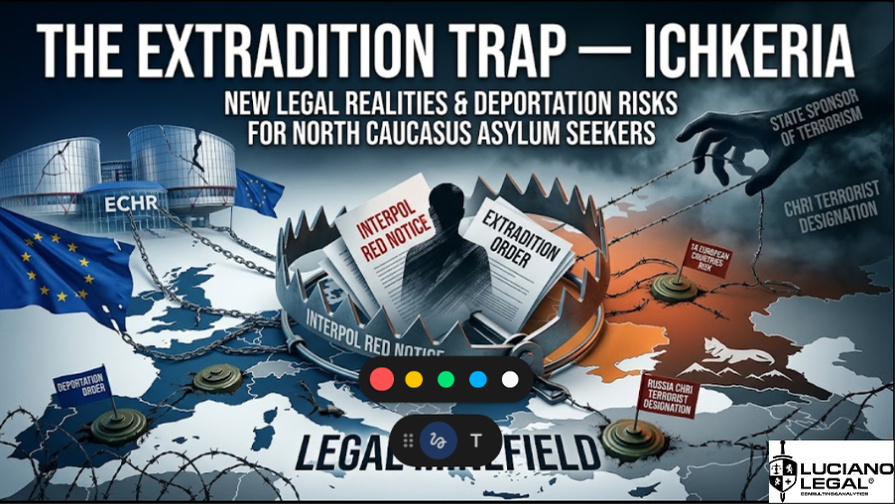
Interpol and international wanted notices
A separate issue is Interpol.
People who have left Russia, especially those who are politically active, anti-war, opposition-linked, or connected with sensitive cases, may face not only migration procedures but also the risk of international wanted notices.
In such cases, it is important to verify:
- whether a Red Notice exists;
- whether there is a Diffusion;
- whether there is a national arrest warrant;
- whether a criminal case is being used as an instrument of political persecution;
- whether the request complies with Interpol standards;
- whether the request violates the principle of political neutrality;
- whether there is a risk of extradition;
- whether there is a risk of detention when crossing a border.
For mobilization refusers, political activists, journalists, opposition figures, and persons from vulnerable regions, the Interpol element may become critical.
Legal assistance and strategic support
Cases involving refusal of mobilization, asylum, deportation, extradition, and Interpol require not a template approach, but a strategic legal position.
In such cases, it is important to:
- collect individual evidence of risk;
- prepare a chronology of events;
- confirm the anti-war or political position;
- demonstrate the real risk upon return;
- connect the mobilization risk with the political, regional, or human-rights context;
- verify possible Interpol risks;
- prepare a legal position based on non-refoulement;
- where necessary, coordinate work with attorneys, experts, human-rights organizations, and international mechanisms.
LLCA — Luciano Legal Consulting & Analytics provides strategic legal and analytical support in complex international cases involving asylum, deportation, extradition, Interpol, political persecution, and cross-border risks.
We do not promise a 100% guarantee of outcome.
We promise a professional approach, precise analysis, strategic preparation, and coordination with specialized professionals where necessary.
Conclusion
Refusal of mobilization in Russia is not always an automatic ground for asylum.
However, in the context of war, authoritarian pressure, political persecution, the risk of forced deployment to the front, the danger of participation in unlawful military actions, and the risk of ill-treatment, such cases require serious individual assessment.
Europe has the right to protect its security.
But the European legal system is also obliged to protect people who, in the event of return, may face persecution, torture, forced mobilization, or other serious violations of fundamental rights.
This is the essence of the rule of law: not automatic decisions, but precise, individual, and honest risk assessment.
Everything may be relative. But law and justice — Never!
LLCA — Luciano Legal Consulting & Analytics
Postfach 3001
Bern, Switzerland
Website: https://llca.ch
Email: info@llca.ch
Russian Mobilization | Draft Evaders | Article 3 ECHR | Political Asylum in Europe | Deportation to Russia | Chechen Applicants | Interpol | Non-Refoulement | Asylum and Deportation Legal Support in Switzerland