Why international clients in Switzerland need more than the law
Switzerland is a country of precision, procedures, institutional order and legal responsibility.
For a local person, this system may feel familiar. For a foreign client, it often appears complex, slow and difficult to understand.
The problem isn’t always the law itself. Very often, the real issue lies elsewhere: in the difference between legal cultures, administrative thinking, language, expectations and the way communication is conducted with state authorities, banks, courts, migration offices, business partners and professional institutions.
This is where cross-cultural legal advisory becomes necessary — legal and strategic support that understands not only legal rules, but also the cultural, institutional and human context behind a case.
Law is not only the text of the law
Many foreign clients believe that it’s enough to simply translate a law or a document into a language they understand.
In practice, this isn’t enough.
Law is not only text. It is a system. It is procedure. It is the style of communication with authorities. It is deadlines. It is evidence. It is the correct structure of a legal position. It is understanding what can be written, when it should be written, to whom it should be addressed and in what tone.
The same situation may be perceived differently in different legal cultures.
In one country, an emotional letter may appear persuasive. In Switzerland, it may appear unprofessional.
In one system, an oral explanation may carry weight. In Switzerland, written documents, chronology, evidence and precise wording often play a decisive role.
In one culture, a client may expect quick promises. In the Swiss system, a professional approach is built on analysis, document review and a realistic assessment of risks.
The difference between legal cultures
International clients often come from countries where state authorities, courts, police, migration offices or banks operate differently.
They may not understand:
why it isn’t enough to simply call and “explain the situation”;
why a written response must be awaited;
why every word in an application matters;
why chaotic documents shouldn’t be submitted without structure;
why an appeal deadline may be decisive;
why the absence of one document can change the entire assessment of a case;
why an emotional story must be transformed into a legally understandable position.
This is not a question of the client’s intelligence. It is a question of different systems.
A foreign client may have a strong case but lose the position because of poor communication, weak document structure or a lack of understanding of Swiss administrative logic.
Administrative communication in Switzerland
The Swiss system requires precision.
State authorities need to see:
who is submitting the request;
on what legal or factual basis;
in relation to which matter;
which documents are attached;
what the chronology of events is;
which legal or administrative action is being requested;
which deadlines are relevant;
which evidence supports the position.
If a submission is chaotic, the authority may fail to see the substance of the case.
If documents are submitted in fragments, the case may appear weaker than it actually is.
If the client doesn’t understand which facts are legally relevant, they may say a lot while missing the most important point.
That is why the work of a legal consultant in international matters is not simply writing text. It is analysis, filtering, structuring and transforming a human situation into a clear legal position.
Where this is especially important
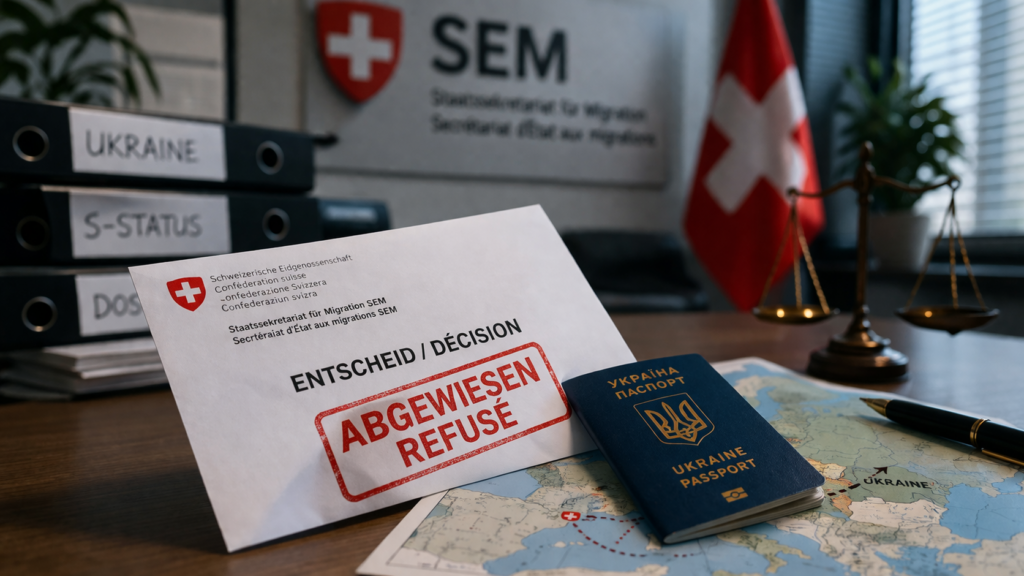
Cross-cultural legal advisory is especially important in matters involving migration, asylum, deportation, entry bans, Schengen / SIS, international relocation, business, investments, compliance and humanitarian situations.
In migration matters, clients often don’t understand which facts are relevant for Swiss authorities.
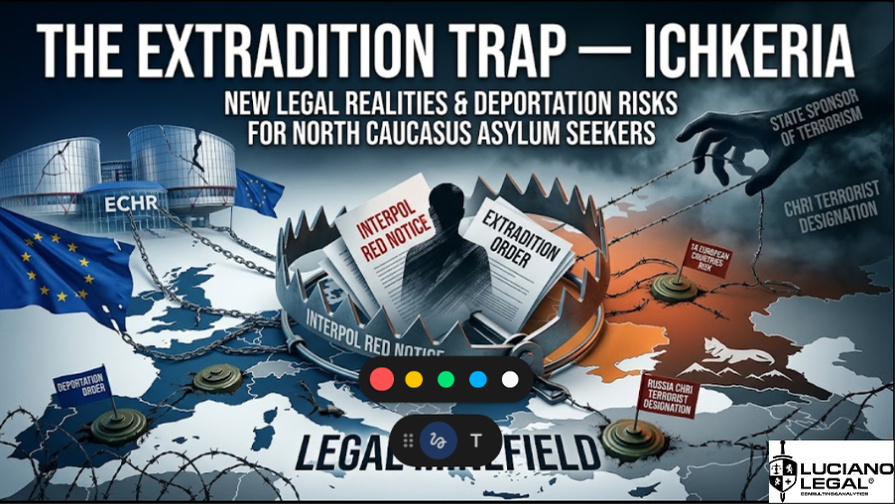
In deportation cases, it isn’t enough to describe fear. It is necessary to show individual risk, evidence, vulnerability and the legal basis for protection.
In business relocation, a foreign entrepreneur may not understand that Switzerland requires transparency, economic logic, tax structure, clean banking compliance and serious documentation.
In banking and investment matters, the issue is not only money, but also the origin of funds, project structure, business reputation and compliance.
In humanitarian cases, it isn’t enough to state that the situation is difficult. Medical, family, social and legal circumstances must be documented.
In each of these areas, legal work stands at the intersection of law, language, culture, institutional logic and strategy.
The role of LLCA
LLCA — Luciano Legal Consulting and Analytics works as a bridge between the foreign client and the Swiss legal, administrative and business system.
We don’t replace state authorities and we don’t promise a guaranteed result.
We provide a professional approach, structured analysis and strategic support.
Our work includes:
analysis of the client’s situation;
review of documents;
identification of legally relevant facts;
risk assessment;
preparation of the case structure;
assistance in communication with authorities and professional participants;
coordination with licensed attorneys where required;
support for international clients in complex administrative, migration, business and legal matters.
For us, it is not enough to simply translate the client’s words. It is important to understand the substance of the case, build the position correctly and present it in a way that is understandable within the Swiss institutional context.
Why strategy is stronger than chaos
Many clients seek help too late.
Sometimes after a refusal. Sometimes after a missed deadline. Sometimes after sending dozens of disconnected emails. Sometimes after they have already complicated their own case through incorrect communication.
In such situations, the task is not only to write a new document.
First, the chaos must be stopped.
Then the documents must be collected.
Then the chronology must be restored.
Then the legal basis must be understood.
Then it must be determined which actions are still possible.
Only after that can strategy be discussed.
In professional legal consulting work, there is no room for impulsive action. Structure, discipline and precision are required.
Cross-cultural understanding as part of legal strength
Understanding different cultures is not a soft addition to legal work.
In international matters, it is part of the strength of the position.
When a consultant understands where the client comes from, how the client thinks, what the client fears, what the client considers obvious and what the client doesn’t understand about the Swiss system, communication can be built correctly.
The Swiss system doesn’t have to adapt to the client’s chaos.
But a professional consultant can adapt the client’s position to the language and logic of the system.
That is the value of cross-cultural legal advisory.
Conclusion
In Switzerland, an international client needs more than a translation of the law.
They need an understanding of the system.
They need strategy.
They need proper communication.
They need a professional approach that connects law, culture, administrative precision and human responsibility.
LLCA works precisely in this space: between the international client and the Swiss system, between the human situation and the legal structure, between risk and strategic decision-making.
Everything may be relative. But law and justice — Never!
LLCA — Luciano Legal Consulting & Analytics
Neuengasse 5, 3011 Bern, Switzerland
Website: https://llca.ch
Email: info@llca.ch
Cross-cultural legal advisory in Switzerland requires more than translation — it requires strategy, institutional understanding and professional responsibility.