Israel–Türkiye: Regional Escalation and Azerbaijan’s Role in the Architecture of Middle Eastern Security
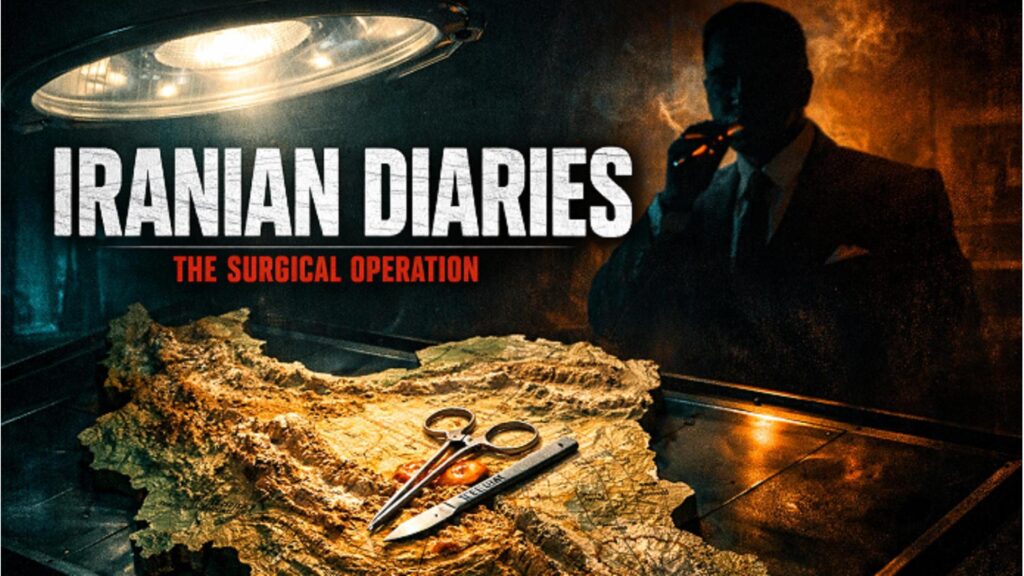
Published within LLCA’s Analytics & Geopolitical Advisory section. This briefing continues the line of regional analysis opened by “Iranian Diaries: The Surgical Operation Has Begun”: where that material tracked the course and consequences of the Israel-Iran war that began in February 2026, this briefing examines one of that war’s most significant second-order effects — the sharp deterioration in Israel–Türkiye relations over Syria, and the role of regional mediators, chiefly Azerbaijan, in containing further escalation.
Prepared by: Luciano Legal Consulting & Analytics (LLCA). This material is analytical and informational in nature, based on open sources as of August 29, 2026, and does not constitute legal advice. Section I sets out verifiable facts with sourcing; Section II presents LLCA’s analytical assessment, which may not align with subsequent developments.
I. Confirmed Facts
1. The Incident and Its Military-Technical Dimension. On the morning of August 18, 2026, the Israeli Air Force carried out a series of eight strikes on the runway and storage facilities of the Abu al-Duhur military airbase in Syria’s Idlib province; no casualties were reported. The Office of Israeli Prime Minister Benjamin Netanyahu took responsibility for the strike, stating that Syria had been “on the verge of breaching” the agreed security status quo by allowing Turkish forces to deploy at the base. Damascus and Ankara condemned the strike, denying any plans for a Turkish military presence at the facility. The airbase lies roughly 70 km from the Turkish border — a distance a modern tactical fighter jet can cover in a matter of minutes, which objectively compresses each side’s reaction time and raises the risk of an incident triggered by misidentification or an uncoordinated manoeuvre rather than deliberate escalation.
2. The U.S. Position. U.S. Special Envoy for Syria and Ambassador to Türkiye Tom Barrack publicly stated that the strike created a risk of direct military confrontation between Israel and Türkiye, and indicated that Washington was working on a mechanism to prevent similar incidents. According to media reports, Israel did not notify the U.S. of the strike in advance.
3. Escalating Rhetoric (July–August 2026). Following the strike, Prime Minister Netanyahu issued sharp statements directed at Türkiye; according to media reports, Ankara for its part initiated proceedings for an international arrest warrant and an Interpol Red Notice against Netanyahu over the interception of the Sumud flotilla bound for Gaza. On August 22, Netanyahu’s office issued a statement branding Turkish President Recep Tayyip Erdoğan an “antisemitic dictator.” On August 25, Erdoğan responded publicly, declaring that Türkiye “will not abandon Syria” and will not allow Israel to dictate “red lines” to it, stressing that “no outside actor can determine the course of Turkish foreign policy.” Around the same time, Türkiye’s Ministry of Justice formally confirmed its request for an Interpol Red Notice against Netanyahu and another Israeli official.
4. Domestic Political Context in Israel. According to CNN (August 25), Netanyahu is leveraging the confrontation with Türkiye partly in the context of Israel’s upcoming October 2026 elections; a campaign billboard in Tel Aviv depicts Erdoğan alongside Iran, Hezbollah, and the mayor of New York as among the “enemies of Israel.” Several analysts — including Haaretz commentator Amos Harel — note that the situation combines genuine security concerns with electoral calculation.
5. Parallel De-escalation Channels. Despite the public escalation, intelligence-level contacts continue: on August 23, Mossad chief Roman Gofman again met with Syrian Foreign Minister Asaad al-Shaibani — this time in Jordan (per the CNN report above). According to several outlets, informal “back-channel” lines of communication have also been opened between Israel and Türkiye to prevent the dispute from spilling over into open conflict.
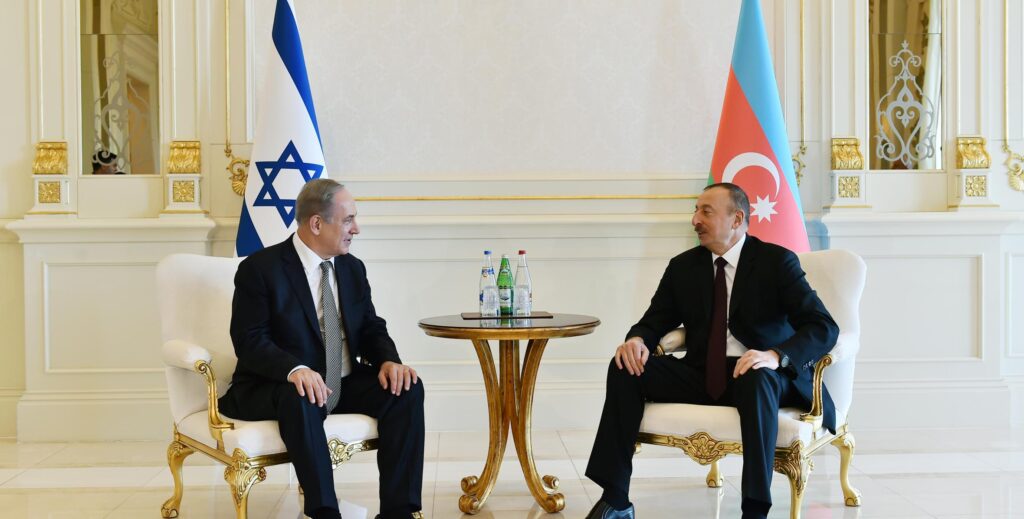
6. Azerbaijan’s Mediation. Ynet, citing Israeli sources, reported that Azerbaijan is working behind the scenes to reduce tensions between Israel and Türkiye; The Jerusalem Post and The Media Line corroborated this account. According to these sources, Azerbaijani President Ilham Aliyev initiated direct dialogue between Israel and Türkiye as far back as April 2025 (the Turkish delegation was led by National Intelligence Organization chief İbrahim Kalın, the Israeli delegation by then-National Security Advisor Tzachi Hanegbi), resulting in the creation of an operational coordination mechanism in Syria designed to prevent unintended clashes. Baku’s current efforts are aimed at reviving this channel. According to the same sources, Israel has expressed marked distrust of the mediation efforts of U.S. Special Envoy Tom Barrack — against this backdrop, Baku’s mediation is regarded by some Israeli interlocutors as the preferred channel, given the trust Baku commands with both sides. This preference is recorded by media sources and does not constitute a statement made by LLCA in its own capacity.
7. The Armenian Genocide Resolution Episode (July 2026). On June 28, 2026, the Netanyahu government approved a draft resolution recognizing the 1915–1916 Armenian genocide, but the Knesset vote was subsequently postponed. According to the Israeli newspaper Haaretz (citing a government source), Prime Minister Netanyahu blocked the vote after Hikmet Hajiyev, the Azerbaijani president’s foreign policy advisor, contacted the Prime Minister’s Office on behalf of Ilham Aliyev. The office of Israeli Foreign Minister Gideon Sa’ar publicly disputed the claim that the decision originated with Netanyahu. Important caveat: the causal link between Hajiyev’s call and the decision to postpone the vote rests on a single source (Haaretz), subsequently repeated by other outlets without independent corroboration; an official Israeli Foreign Ministry spokesperson disputed this version of events. LLCA does not assert this causal link as an established fact, but merely records it as a version reported in the press.
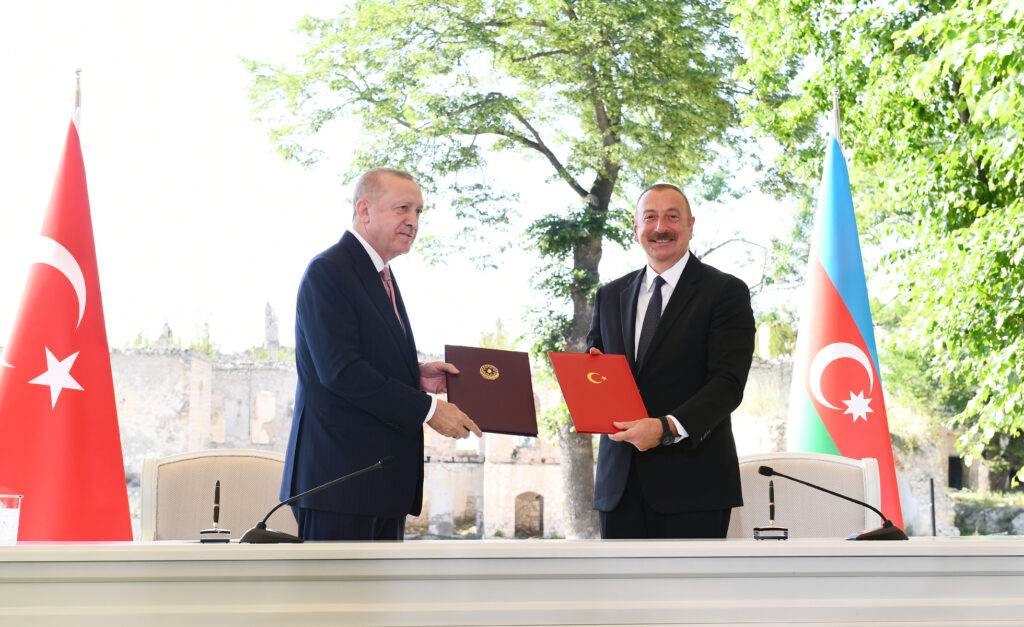
8. The Shusha Declaration. In 2021, Azerbaijan and Türkiye signed the Shusha Declaration, formalizing allied obligations between the two states, including on matters of mutual defense — see also Jamestown Foundation’s analysis.
9. Azerbaijan’s Position on Palestine. President Ilham Aliyev has repeatedly and publicly voiced support for resolving the Israeli-Palestinian conflict on the basis of the two-state principle and UN resolutions, as well as support for an independent Palestinian state within the 1967 borders with East Jerusalem as its capital (also reaffirmed at the OIC). This position is borne out in practice: through cooperation with the UN and the Organisation of Islamic Cooperation, Azerbaijan has channeled more than $9.2 million in humanitarian and social assistance to Palestine, including $5 million for infrastructure modernization in Jerusalem and $630,000 for the Gaza Strip. On July 10, 2026, Aliyev approved a protocol for additional financial assistance to the Palestinian Embassy in Baku.
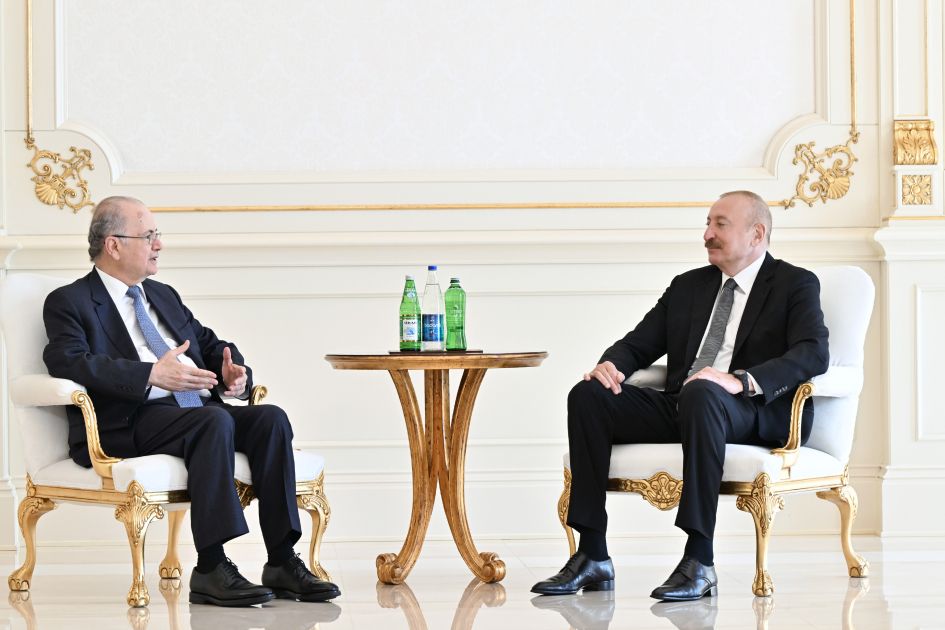
This support is not merely declaratory but substantive. On July 15–16, 2026, Palestinian Prime Minister Mohammad Mustafa paid an official visit to Baku and was received by President Ilham Aliyev at Zagulba Palace. During the meeting, Mustafa conveyed greetings from Palestinian President Mahmoud Abbas and thanked Aliyev for Azerbaijan’s sustained support for the two-state principle, its humanitarian assistance, and its support for UNRWA, as well as for the decision to build a school for 600 students in Nablus as part of Baku’s humanitarian program. The meeting also noted with satisfaction that 23 of the 37 Palestinian students studying in Azerbaijan do so under the Heydar Aliyev International Education Grant — the Palestinian Prime Minister personally thanked the Azerbaijani head of state for the programme. The two sides also discussed the opening of an Azerbaijani representative office in Ramallah and Baku’s coverage of the operating costs of the Palestinian Embassy in Baku — steps described in the joint statement as reflecting the high level of bilateral relations.
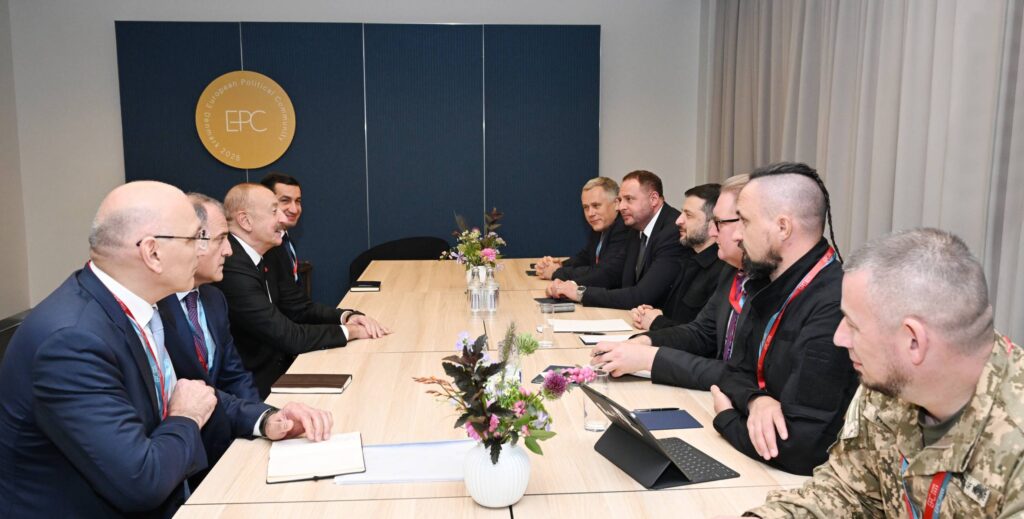
10. Azerbaijan’s Position on Ukraine. Aliyev has repeatedly affirmed — including in July 2026 at the IV Shusha Global Media Forum — Azerbaijan’s unwavering support for Ukraine’s territorial integrity, sovereignty, and the inviolability of its borders, along with humanitarian assistance to Ukraine at both the state and civic levels. Azerbaijan has not joined Western sanctions against Russia; Kremlin spokesman Dmitry Peskov described Aliyev’s position on Ukraine as “mistaken” in July 2026. At the same time, Baku maintains a working diplomatic dialogue with Moscow (a July 2026 phone call between Putin and Aliyev was characterized by the Kremlin as “constructive”).
11. Syria’s Reconstruction. On February 17, 2026, at ICESCO headquarters in Rabat, Azerbaijan, Syria’s Ministry of Education, and ICESCO signed a $30 million strategic partnership agreement (running through December 31, 2030) to rehabilitate Syria’s education infrastructure: constructing roughly 10 new school buildings and carrying out major repairs on approximately 100 damaged schools (110 facilities in total), with Azerbaijan serving as the principal funding donor. Baku has also provided humanitarian aid to Syria and shares reconstruction expertise accumulated following the Karabakh campaign.
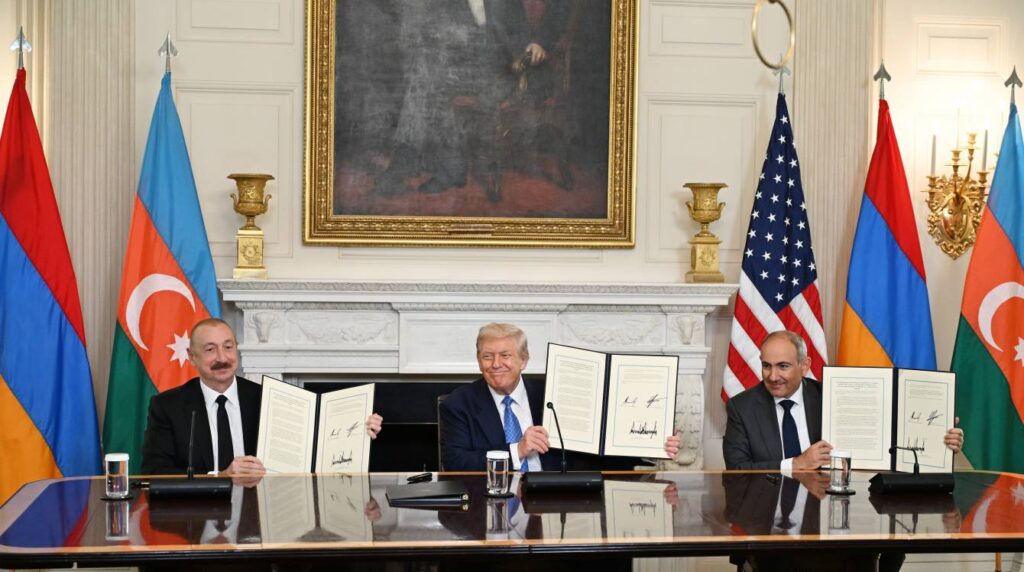
12. The Peace Process with Armenia. On August 8, 2025, in Washington, and with U.S. mediation, Ilham Aliyev and Armenian Prime Minister Nikol Pashinyan signed a declaration on peaceful relations; the two countries’ foreign ministers initialed a peace agreement. Final signature of the treaty remains uncertain: the Armenian side requires a constitutional referendum to remove territorial references from its constitution, with a realistic timeline of no earlier than 2026–2027. The normalization process remains ongoing as of this writing.
13. The Middle Corridor. Azerbaijan is positioned — including in assessments by European observers — as a key link in the “Middle Corridor” transport route connecting East and West while bypassing traditional routes through Russia and Iran, a role with significant implications for diversifying Europe’s logistics and energy flows.
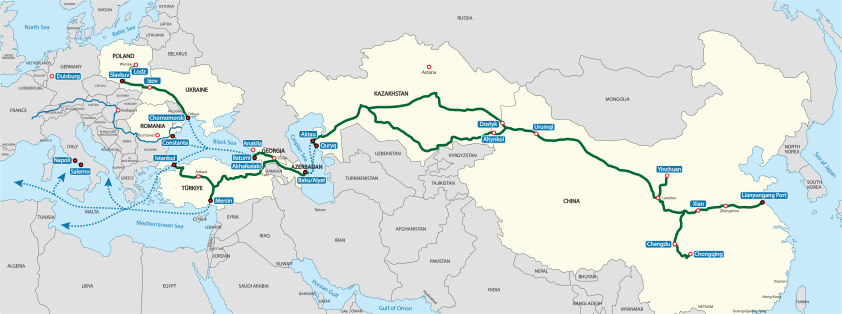 Photo: Map: Trans-Caspian International Transport Route (Middle Corridor). Author: Tanvir Anjum Adib. Licensed under CC BY-SA 4.0.
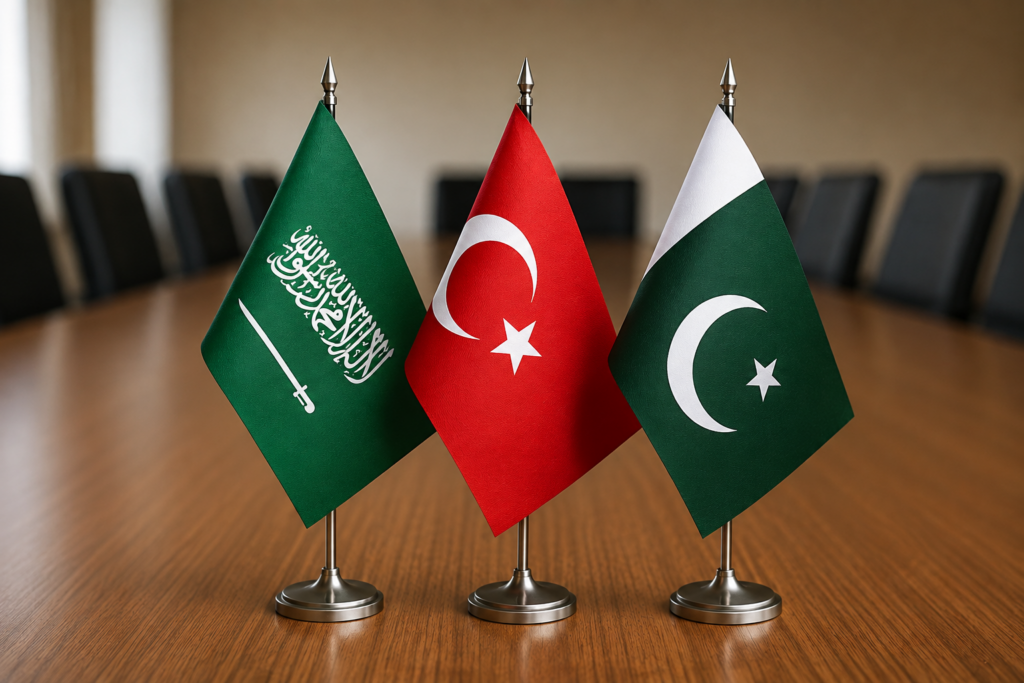
14. The Mecca Joint Defence Agreement. On August 7, 2026, at the Makkah Al-Mukarramah Summit for Joint Defence, Saudi Arabia, Türkiye, and Pakistan signed the Mecca Joint Defence Agreement — the document was signed by Crown Prince Mohammed bin Salman, Turkish President Recep Tayyip Erdoğan, and Pakistani Prime Minister Muhammad Shehbaz Sharif. Under the official joint statement, the agreement enshrines a principle of collective defense: an armed attack against any one signatory is to be regarded as an attack against all three. The agreement builds on the earlier Saudi-Pakistani Strategic Mutual Defence Agreement of September 17, 2025. Turkish Foreign Minister Hakan Fidan publicly described the mechanism as technically comparable to NATO’s Article 5, while emphasizing that the agreement is not directed against any specific country. Important caveat: analysts (CISS Pakistan, Counterpoint BD, Times of Israel Blogs) uniformly note that, unlike NATO, the pact currently lacks a unified command, a headquarters, and decades of military integration, and that the “attack on one, attack on all” formula is not accompanied by an automatic military-response mechanism. The agreement is officially framed as defensive in nature.
II. LLCA Analytical Assessment
1. Azerbaijan as a De-escalation Channel. The combination of Baku’s ties — a politico-military alliance with Türkiye (the Shusha Declaration) alongside a close military-technical partnership with Israel — creates a rare configuration in which Azerbaijan holds channels of trust in both Ankara and Jerusalem simultaneously. This is a structural advantage borne out by the very fact that both sides have turned to Baku for mediation, rather than an evaluative judgment on LLCA’s part.
Tellingly, this same logic of balance holds in the broader Palestinian context as well. Azerbaijan officially supports resolving the Israeli-Palestinian conflict on the basis of the two-state principle — Israel and Palestine — and this position is not merely declaratory: despite exceptionally close military-technical and intelligence ties with Israel, Baku consistently provides Palestine with humanitarian and financial assistance amid the ongoing humanitarian crisis in Gaza. This combination — a deep strategic alliance with one party to the conflict alongside substantive support for the other — is in itself an indicator of the maturity and independence of Azerbaijani diplomacy, and not merely a factor that lends Baku credibility as a mediator in the Israel–Türkiye dispute.
This support carries practical, not merely declaratory, weight. On July 15–16, 2026, Palestinian Prime Minister Mohammad Mustafa paid an official visit to Baku and was received by President Ilham Aliyev at Zagulba Palace. During the meeting, Mustafa conveyed greetings from Palestinian President Mahmoud Abbas and thanked Aliyev for Azerbaijan’s consistent support for the two-state principle, humanitarian assistance, and support for UNRWA, as well as for the decision to build a school for 600 students in Nablus as part of Baku’s humanitarian programme. The meeting also noted with satisfaction that 23 of the 37 Palestinian students studying in Azerbaijan do so under the Heydar Aliyev International Education Grant — the Palestinian Prime Minister personally thanked Azerbaijan’s head of state for the programme. The two sides also discussed the opening of an Azerbaijani representative office in Ramallah and Baku’s coverage of the Palestinian Embassy’s operating costs in Baku — steps that, per the joint statement, reflect the high level of bilateral relations.
2. The Limits of Alternative Mediators. Reports of Israeli distrust toward U.S. Special Envoy Tom Barrack suggest that, in the current episode, Washington’s role as the sole channel of de-escalation is limited. Framing this as an absolute inability of the U.S. to substitute for Azerbaijan would be an overreach based on a single source; it is more accurate to say that, at present, Baku holds an operational advantage documented in the press.
3. Red Lines and Principled Consistency. The public formula articulated by Azerbaijani presidential advisor Hikmet Hajiyev regarding Baku’s “red lines” — spanning Türkiye’s security, the Palestinian question, and Ukraine’s territorial integrity — indicates that Azerbaijani diplomacy is not built on situational loyalty to any single partner, but on its own coherent set of principles, applied consistently even at some cost to relations with larger allies (Israel, on Palestine; Russia, on Ukraine).
4. The “Middle Power” Thesis. The convergence of three tracks — mediation in the Middle East alongside participation in Syria’s reconstruction; a role in the Middle Corridor as an element of Europe’s energy and logistical security; and the advancement (however incomplete) of the peace process with Armenia — provides grounds for characterizing Azerbaijan as a regional “middle power,” whose influence rests not on military capacity but on its function as a connecting node between larger actors with diverging interests. This is an evaluative conclusion by LLCA, grounded in the aggregate of facts set out in Section I, rather than an independently verifiable fact in its own right.
5. The Mecca Agreement Factor. The emergence of the Mecca pact theoretically raises the cost of any direct military confrontation with Türkiye: formally, a full-scale strike on Turkish armed forces could fall within the scope of a collective-defense principle involving Saudi Arabia and Pakistan, a nuclear-armed state. This may serve as an additional deterrent factor for Israel and may help explain why, despite sharp public rhetoric, both sides continue to maintain closed de-escalation channels, including through Azerbaijan. That said, framing this as a direct cause of restraint on the part of Israel’s leadership would be an overreach: no official statements from Jerusalem linking the Mecca pact to its strategic calculus have yet been recorded, and experts themselves characterize the pact as institutionally “thin,” lacking an automatic military-response mechanism. This is an evaluative hypothesis by LLCA regarding a possible deterrent effect, not an established fact.
6. Risk Factors and Current Dynamics. Even amid active Azerbaijani mediation, structural factors capable of driving escalation beyond either side’s intent remain in place: Abu al-Duhur’s proximity to the Turkish border, Türkiye’s now-formalized Interpol Red Notice request against Netanyahu, and diverging Ankara–Tel Aviv interests over the future Turkish military presence in Syria. The sharp exchange of public insults between the offices of Netanyahu and Erdoğan shows that rhetorical escalation continues to intensify in parallel with mediation efforts — this is not a contradiction but a pattern typical of such crises, in which public rhetoric (partly tied to Israel’s electoral cycle) and closed-door diplomacy proceed along separate tracks. The success of Baku’s mediation efforts is not, at this stage, guaranteed, and should be regarded as an ongoing process rather than an achieved outcome.
III. Developments Worth Monitoring
- The progress of Türkiye’s now-formalized Interpol Red Notice proceedings against Netanyahu;
- The outcome of Israel’s October elections and its impact on subsequent rhetoric and policy toward Türkiye;
- The outcome of Mossad–Syrian Foreign Ministry contacts (Jordan, August 23) and the status of informal Israel–Türkiye communication channels;
- The progress and outcome of Armenia’s constitutional referendum (no earlier than 2026–2027) as a precondition for the final signing of the peace treaty with Azerbaijan;
- Official positions from the Israeli and Turkish foreign ministries following the current round of mediated contacts;
- Any public statements from Jerusalem or Ankara linking the Mecca Agreement to their risk calculus in the Israel–Türkiye dispute;
- The trajectory of Baku–Moscow relations amid persistent divergence over Ukraine.
Prepared by the Analytical Advisory Board, Luciano Legal Consulting & Analytics (LLCA).
Everything may be relative. But law and justice — never!
Contact
LLCA — Luciano Legal Consulting & Analytics
Neuengasse 5
3011 Bern
Switzerland
Website: https://llca.ch
Email: info@llca.ch
Geopolitical Analysis | Middle East Security | Azerbaijan Diplomacy | Israel–Türkiye Relations | Regional Mediation | Intelligence Briefing